CV666 Poker Guide: Decisions, Probability, and Responsible Play
Use this independent guide to understand poker basics, disciplined decisions, and responsible use. CV666's catalogue material lists poker among its game categories, but specific titles and current availability may change.
Registration guide
- Separate hand strength from probability
- Set a limit for each session
- Card outcomes are never certain
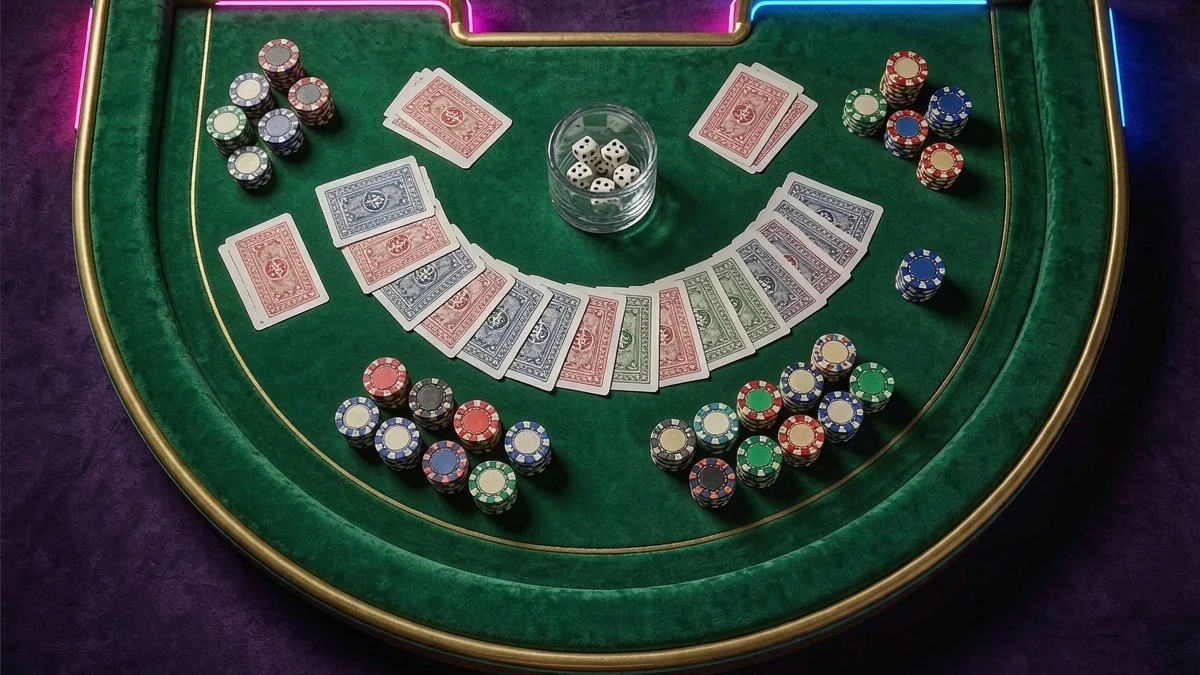
A general poker illustration; this is not a verified CV666 interface or screenshot of a specific game.
Why this CV666 poker guide is different
Knowing the card rules is not enough in poker. You also need to consider hand strength, position, timing, and your own budget. This guide separates CV666's general category information from practical poker concepts. It does not claim that a specific poker table is currently available on CV666.
When reviewing an online game, read the displayed rules, stake limits, outcome method, and applicable terms. The supplied CV666 information describes a Bangladesh-focused service using Bangla, English, and Bangladeshi taka; check the current page before relying on any feature.
A fast poker decision is not always a good decision. Consider the hand's probability, the risk of calling or folding, and whether the decision fits your budget. No strategy guarantees a win, and a previous round does not determine the next one.

- Observe the pace of rounds
- Do not treat others' actions as certainty
- Avoid rushing and take breaks
A general table-game illustration; it does not verify a specific CV666 table or match listing.
Why table rhythm matters in poker
Table rhythm means the pace of rounds, decision pauses, and time to review information. It is not a signal of winning. A useful beginner habit is to read the rules and stake limits, observe a few rounds, and then decide within a personal limit.
You cannot infer a certain result from another player's action. Separate card probability, table rules, and the information actually available to you. Even displayed features or statistics do not guarantee a future outcome.
Understand this independent site's privacy approach
This is a static information site and does not provide operator account creation, payment submission, or working registration forms. If you follow a link to an external video or service, that third party's privacy rules may apply. See this site's privacy policy for details.
Key points in the CV666 poker guide
- Separate hand strength, probability, and table rules.
- CV666's published categories mention poker, but current availability of a specific game is not confirmed.
- Set money, time, and break limits before each session.
- Do not treat another player's action or a previous result as proof of a future win.
- Consider rules, probability, and responsible use together before deciding.
Understanding poker as a Bangladesh-focused reader
For Bangladesh-based readers, the first practical point is to keep the currency and personal limits clear. CV666 information refers to Bangladeshi taka and Bangla and English, but you should not assume that a particular poker table or title is currently available.
Treat poker as a game concept involving rules and uncertainty, not as a way to change your finances. Before making real-money decisions, consider age, local law, budget, and the relevant terms.
Poker mindset, patience, and personal limits
Check your state of mind before playing. Anger, fatigue, stress, or an urge to recover earlier losses can make decisions riskier. In that situation, take a break and review the rules, probability, and budget later.
Building a style does not mean taking greater risks. You might observe within a small limit or take a break after a set period. The important point is to keep the same limit and not increase the budget after a poor result.
Keeping a record can clarify decisions: when you started, how long you played, what amount you set, and when you took a break. It does not predict wins, but it can help you understand your habits and limits.
- Do not chase losses
- Pause when tired or upset
- Use cooling-off or self-exclusion when needed
A general illustration about attention and decision-making; it is not a specific game scene.
Practical advice before reading the CV666 poker guide
Before exploring poker, consider your mindset. Poker rewards patience, attention, and measured decisions, so playing while tired, upset, or overly excited can affect your judgment. The source material lists poker among CV666’s stated game categories, but the availability of any specific poker title may vary. Set a budget and a time limit in advance, then treat both as firm boundaries.
If you are new to poker, spend the first few hands learning the table layout, turn order, available information, and the meaning of each action. Observe before making decisions, and avoid treating a short winning or losing streak as proof of a reliable strategy. A pause can help you review your choices calmly. Keep a record of time and spending so the session remains controlled rather than impulsive.
Poker suits players who enjoy careful observation, probability, and step-by-step decision-making rather than constant speed. Learn the rules of the specific format first, understand which actions are available, and remember that no approach guarantees a positive result. If the game stops feeling recreational, end the session and use available limits or a cooling-off break. The aim is informed, controlled entertainment—not chasing losses.

- This activity is for adults aged 18+
- Consider deposit, time, and loss limits
- Seek help if control becomes difficult
A general responsible-gaming illustration; it is not a CV666 promotion or promise of winning.
Responsible Poker Play Matters
CV666's source material lists poker as a game category, but this guide does not confirm that any specific poker title is currently available. Treat poker as entertainment, set an affordable spending limit and a time limit in advance, and do not make decisions to chase losses. People under 18 should not take part in gambling-related activities.
Take a break if playing increases stress or begins to affect daily life. Keep track of your time, spending, and decisions, and consult the responsible-use guidance when needed.
Login safety guide